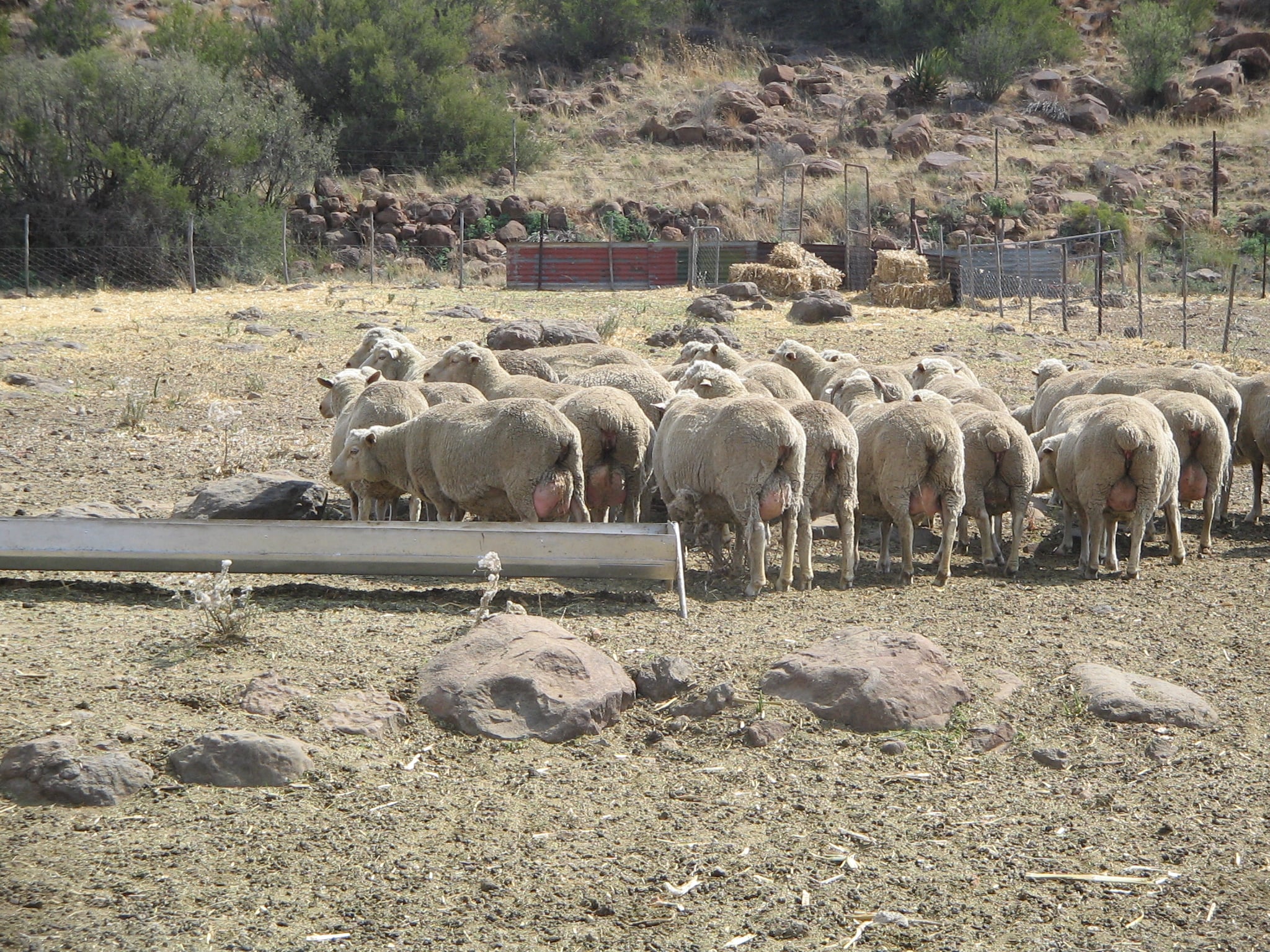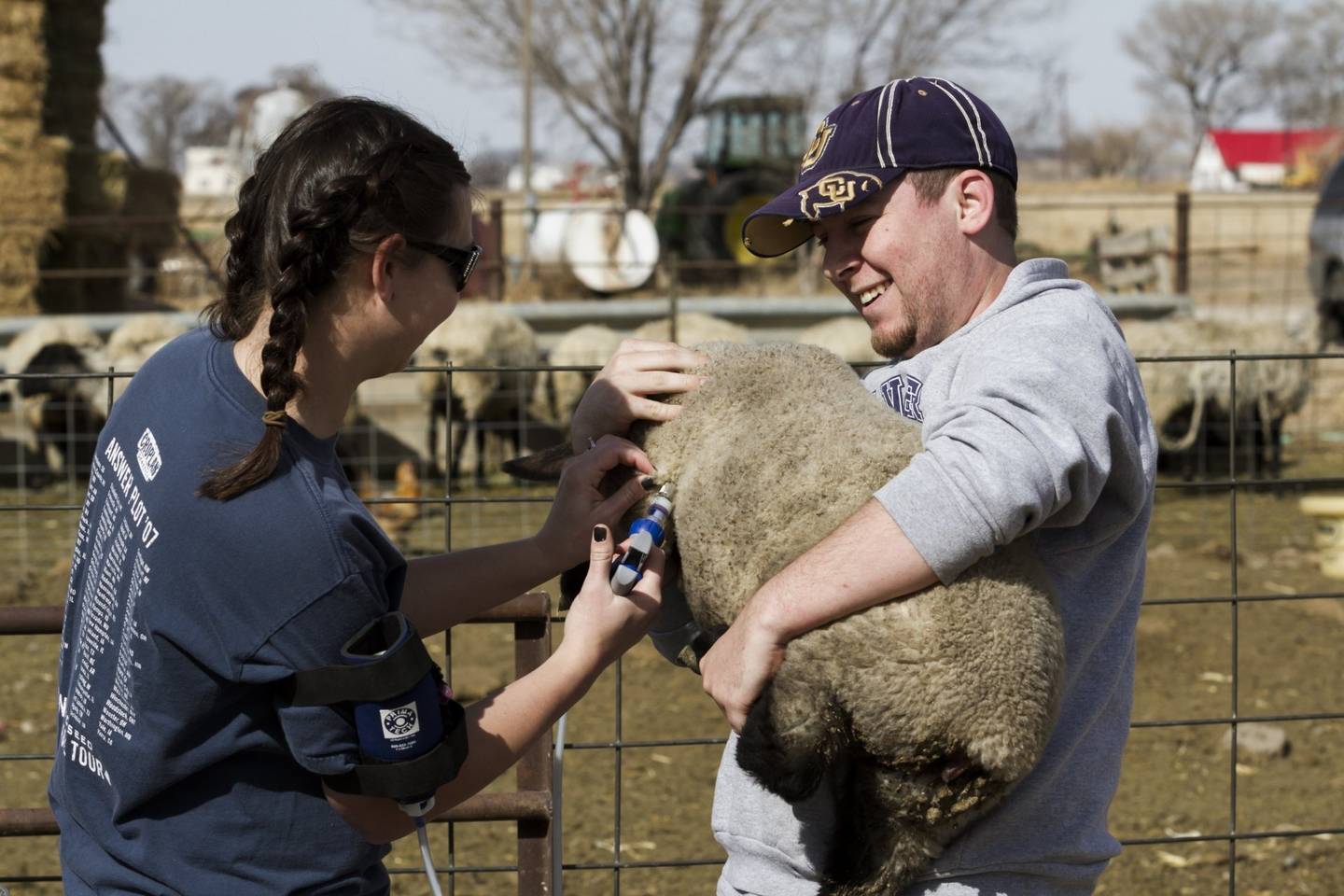
The five-year ‘Understanding Rift Valley Fever (RVF) in the Republic of South Africa’ project, coordinated by the National Institute for Communicable Diseases (NICD) and EcoHealth Alliance, was the most comprehensive RVF investigation conducted to date. Bringing together a diverse group of experts from governmental, non-governmental, academic, and private organisations, both domestic and international, the project examined how environmental factors (weather, climate, soil, and vegetation) impact the mosquitoes that maintain and transmit RVF virus (RVFV) to wildlife, livestock, and humans.
This One Health project expands the understanding of what happens to the virus during periods between epidemics, and aids improving prediction, prevention, and mitigation of future RVF outbreaks.
The project primarily took place in a 40 000 km2 region of the Free State and Northern Cape, South Africa, which includes the areas hardest hit during the 2010–11 RVF outbreak. Additionally, for one aspect of the project, work was conducted in Limpopo. The results of this five-year project are outlined below.
Environmental factors
We conducted environmental assessments on 23 farms in the primary study area.
Climate and Weather
The study period (September 2014 to May 2019) was characterised by below-average rainfall, poor vegetation growth, and above-normal land surface temperature during the rainfall season (October to May). These conditions culminated in the drought during the 2015–16 growing season. Additionally, during each season, rainfall and vegetation peaked a month later than average. These climatic conditions have spatial and temporal implications for mosquito breeding and abundance. Low numbers of mosquitoes were collected during the 2014–17 seasons, and only in 2018–19 was there an increase in the number of mosquitoes collected. As a whole, the conditions have not been favourable for RVF outbreak during the interepidemic period, with only one isolated outbreak reported on a single sheep farm in the southwestern part of the study region in May 2018, which, however, resulted in infection of at least 8 out of 22 (36,4%) farm workers and the loss of hundreds of lambs.
Vegetation
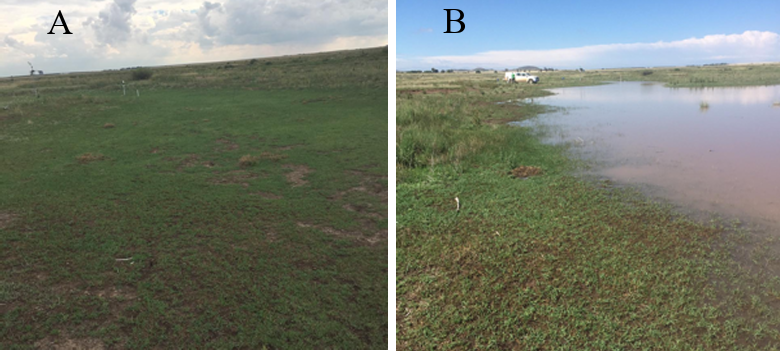
Vegetation was evaluated at all sites using both the line-point and Braun-Blanquet vegetation survey methods. Eight plant communities, dominant and diagnostic plant species, were identified across the sites. Juncus spp. rushes were the most commonly identified dominant vegetation (Brand et al., 2018).
Soil
We evaluated the chemical, mineralogical, physical, and microbial properties of the soil at the same sites where we did the vegetation work. We were also able to link soil properties with previously reported RVFV mortalities in livestock. We developed a model that could predict whether a farm with a given wetland was likely to have reported RVF-related mortalities to the OIE given we had data on calcium, potassium, magnesium, arsenic, bromide and the percent sand (Verster et al., submitted).
Mosquitoes
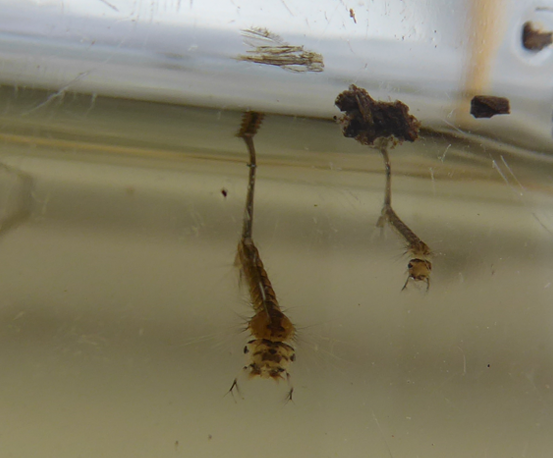
A total of 115 000 mosquitoes were collected during the study. We identified 12 362 floodwater Aedes mosquitoes, including species that are potentially responsible for RVF maintenance (capable of transovarial transmission of RVF). The abundance of known and potential RVFV vectors collected in the traps increased from wet season to wet season, as the post-drought conditions improved. The species implicated in the 1951 outbreak in South Africa, Aedes caballus, was the most abundant floodwater mosquito. Culex theileri likely played the major role in the transmission of RVFV during previous outbreaks and was the most abundant mosquito species. To date, all mosquitoes tested for RVFV by real-time RT-PCR were negative.
Of the small number of mosquitoes collected after they had a blood meal, 63% had fed on sheep, 14% on cattle, 2% on steenbok, and 8% had fed on both sheep and cattle (14% did not produce a DNA sequence to confirm the host species). A collection of nearly 400 larvae immediately following the flooding of a pan allowed us for the first time to determine the succession of mosquitoes by species and genus in a pan in South Africa (Figures 1 & 2).
Wild & domestic ruminant serosurvey
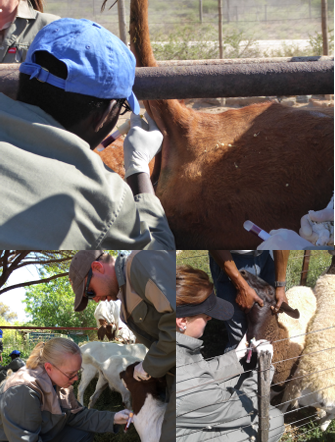
During the five-year study we sampled 6 973 cattle, sheep, and goats in the Free State (FS), Northern Cape (NC), and Limpopo (L) Provinces. The crude seroprevalence in the study area (FS & NC) was 20,3% in 2015 and 2017 (across all three species) (Ngoshe et al. in review). While the seroprevalence did not change in unvaccinated sheep and goats, it did decrease in unvaccinated cattle. In Limpopo, the proportion of cattle and buffalo that have been previously infected with RVFV was about a quarter of that seen in livestock in the FS and NC.
We completed a serosurvey of 2 268 buffalo, springbok, blesbok, kudu, and wildebeest in the FS and NC, and estimated the overall proportion of these wild animals that were previously infected, similar to the proportion found in cattle and buffalo in Limpopo, and much lower than the livestock in the same area.
Of the unvaccinated sheep that tested negative for previous infection with RVFV and were monitored for over two years, a small percentage of them did become positive (suggesting they were infected with RVFV), indicating that the low-level of RVFV transmission among sheep did occur during the study.
Of sheep vaccinated in our study with the OBP Smithburn life-attenuated vaccine, seroconversion could be demonstrated in 97% of immunised animals. Among sheep that seroconverted, only a couple no longer had detectable antibodies more than two years after post-vaccination. In comparison, less than half of the sheep from the cross-sectional study that were reportedly vaccinated with the same vaccine had detectable antibodies. This discrepancy seems to indicate an urgent need to investigate vaccination practices, including maintenance of the cold chain from the producer to the retailer to the farmer.
Human serosurvey and questionnaires
We completed two serosurveys in farmers and veterinary professionals, sampling 1 247 people and estimating the proportion of people who were previously infected was 9% in farmers and farm workers (n= 638 in 2015) and about 8% in veterinarians (n= 138 in 2015) (Msimang, 2019). We also completed a serosurvey in abattoir workers, and found that the seroprevalence of RVFV antibodies was similar to that found in farm workers and veterinarians.
We invited all veterinary professionals and farmers/farm workers to participate in a long-term study and tested their serum for RVFV antibodies over three years. We estimated people that had originally tested negative were exposed to RVFV at a rate that was half of that we saw in sheep.
Collaborations & training
Communicating with our collaborators and stakeholders was essential for the success of the project. We hosted three mosquito workshops, and trained 36 participants to identify RVFV vectors and other nonmalarial mosquitoes of public health importance. We supported the training of seven graduate students and indirectly supported the training of 11 additional students. We trained 29 people, including project staff (n=19) and students (n=17) involved in the project on topics such as biosecurity, biosafety, sampling techniques and protocols, human and animal ethics considerations while conducting research and much more. We created four One Health field teams, demonstrating the One Health approach to a number of young South African researchers and health workers. During the RFV outbreak in South Africa in 2018, project staff were called upon by the provincial Department of Agriculture to assist them with the epidemiological investigation, mosquito sampling on the farm, and assisting with developing predictive maps and rainfall summaries.
In addition to four published scientific articles and two more that are under review, updates on the project were widely distributed in various farming magazines, improving outreach to the regional and national community. More than 218 presentations were given that discussed the project at events that ranged from international scientific or policy forums to local farmers’ unions.
Plans for the future
The ‘Understanding Rift Valley Fever in Republic of South Africa’ project was successfully concluded in May of 2019. We thank all of you for participating in the project or stakeholder meetings, and for your input, which has invariably made this project successful. We also thank our funders at the US Defence Threats Reduction Agency. A new project is now underway to continue our long-term studies and initiate work on RVF with additional scientific disciplines, partners, and locations. We look forward to telling you more about our plans for the ‘Reducing the Threat of Rift Valley Fever through Ecology, Epidemiology, and Socio-Economics’ project and receiving your feedback.