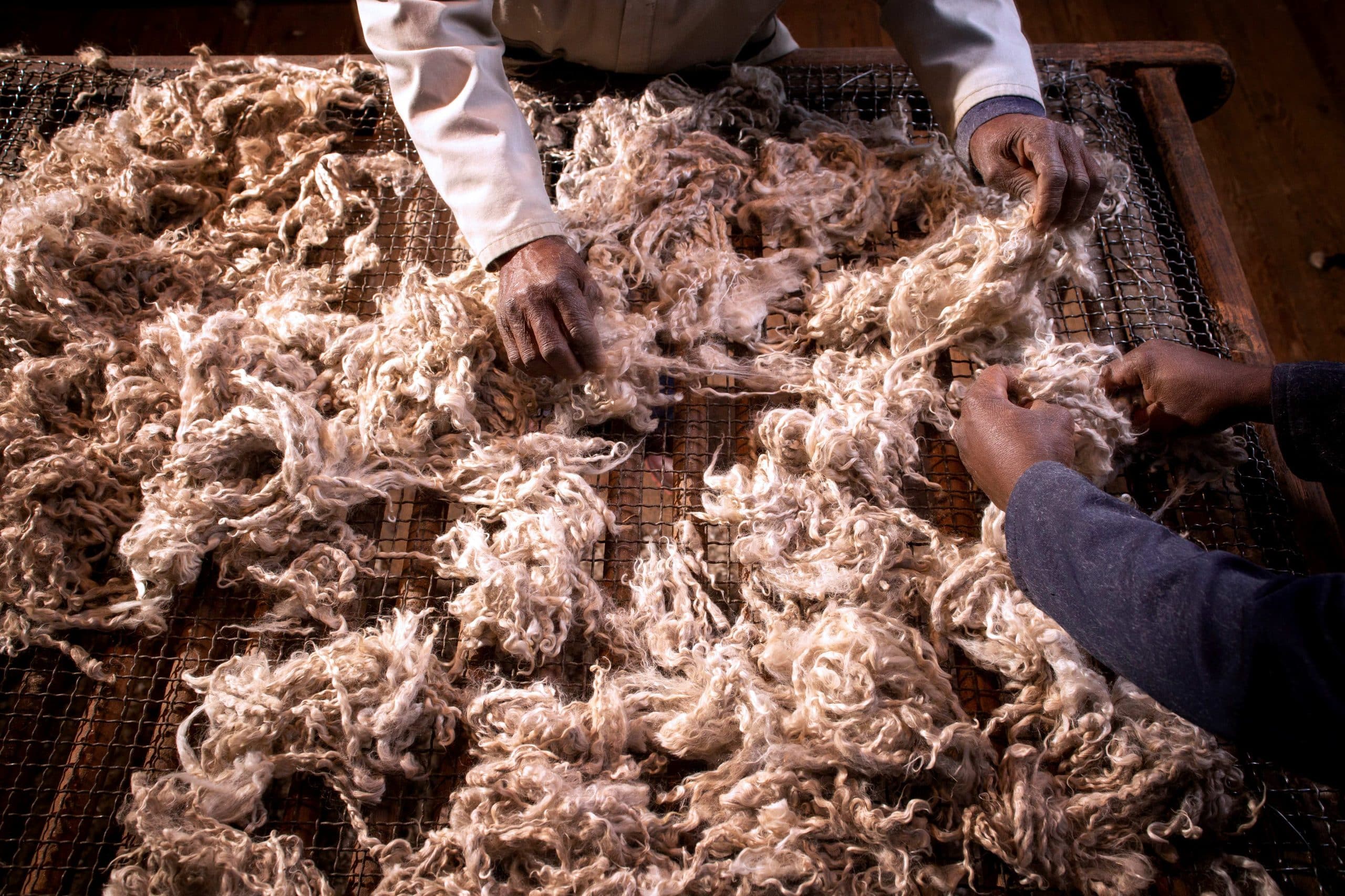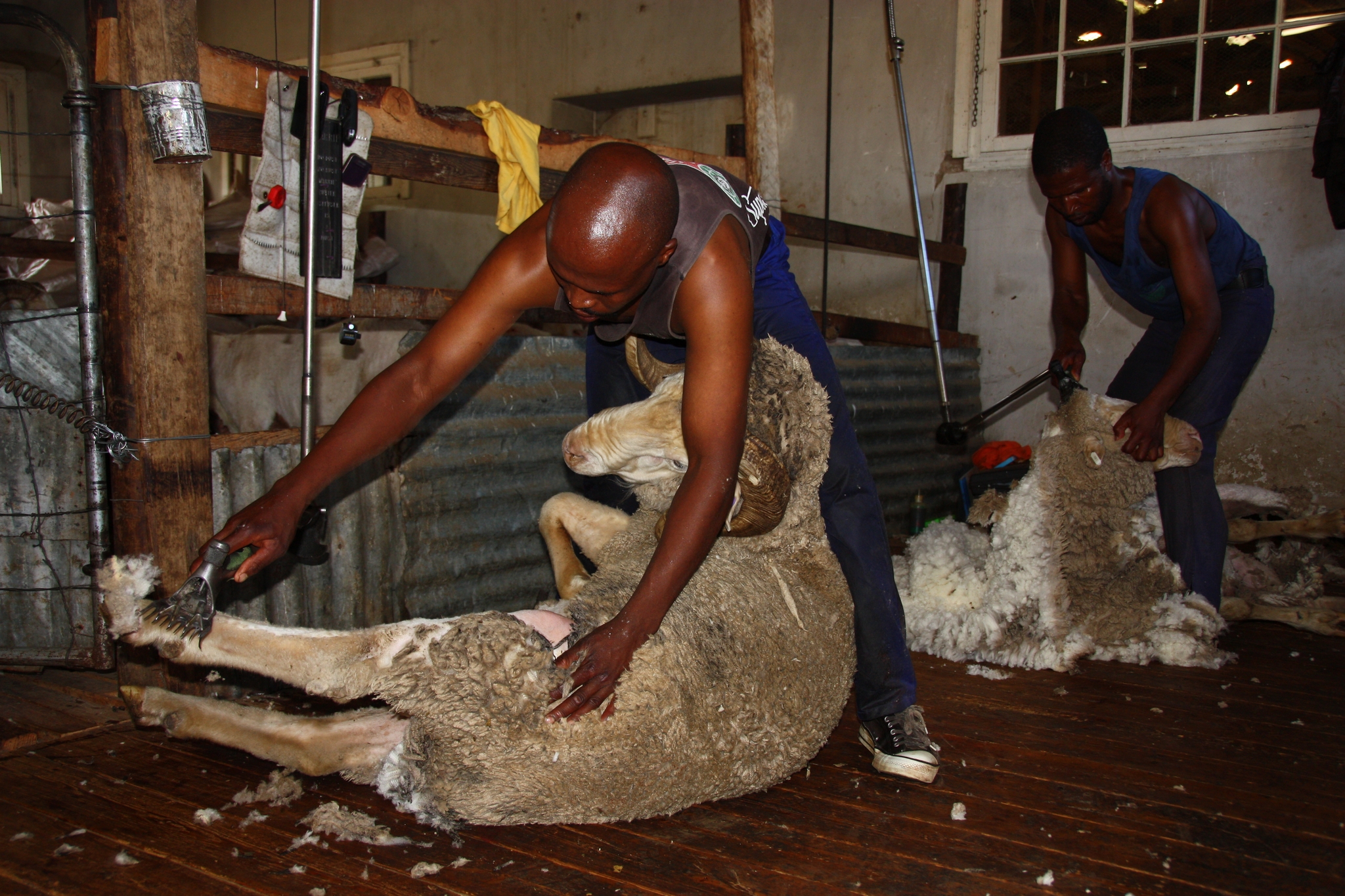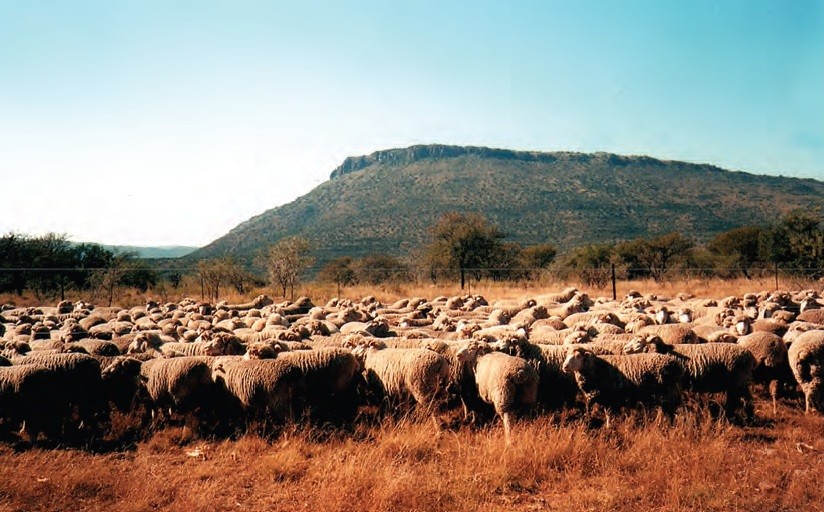
Towards the end of 2013, veteran sheep farmer Hilson Shuman of Grey Craig farm near Queenstown in the Eastern Cape, made South African Merino history when he delivered his 60th wool clip to Bruce, Lappersonne and Saunders wool brokers in Port Elizabeth.
In 2016, he broke the world wool clip record with 63 clips. Last year, in 2018, Shuman produced a world-record 65th wool clip. The National Wool Growers’ Association (NWGA) and all affiliated sectors joined together to congratulate him on this unique achievement. This article was commissioned to celebrate the Shuman family’s remarkable dedication and their unique Merino legacy.
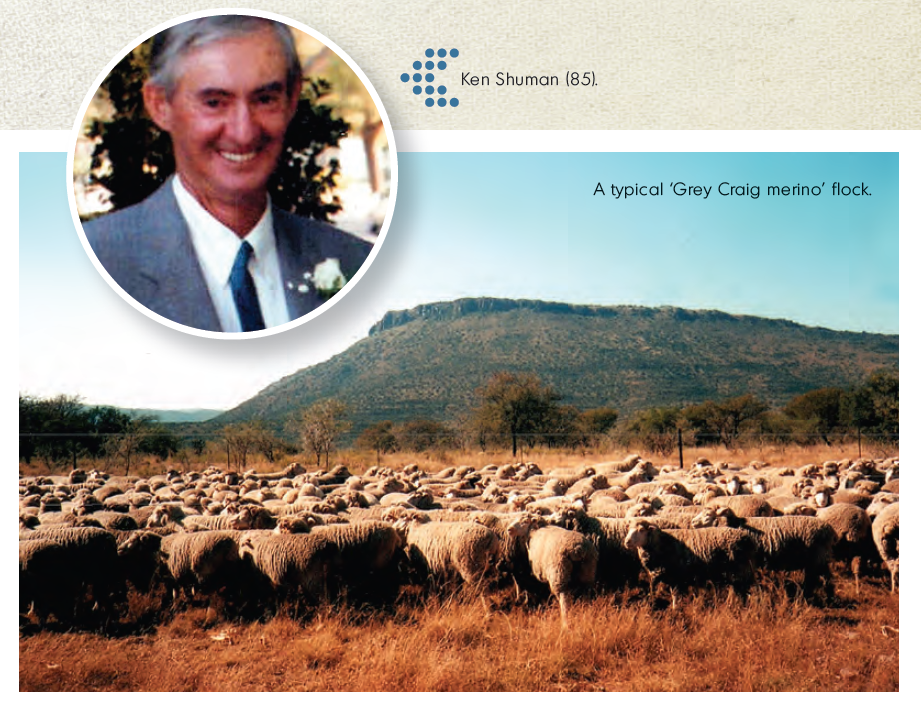
The Shuman family have been farming Merino sheep for four generations. Shuman himself shows off a magnificent lineage of descendants who all made their mark as renowned sheep farmers.
A wool baron and many pioneers
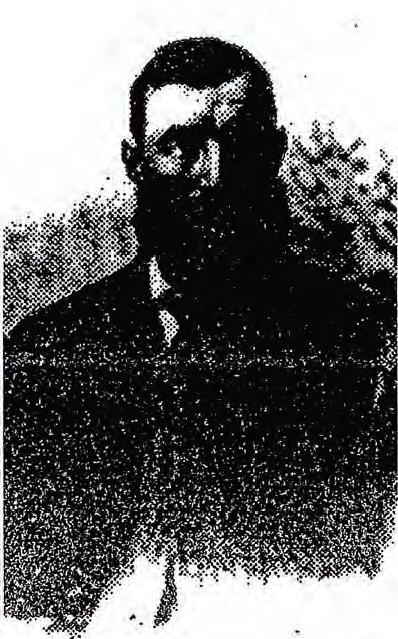
Baron Wilhelm Karl von Schumann is the great ancestor of the Shuman families who today farm in the Queenstown district. He was a nobleman who emigrated from the German kingdom of Prussia to South Africa in 1855.
Wilhelm purchased a farm in the Wodehouse district between Dordrecht and Elliot in the Eastern Cape and named it Wasche-Erdwall. It was here that he became a cattle and sheep farmer, as well as a merchant and washer. His merchandising firm was known as Schumann & Co. and dealt mainly with wool from the Orange Free State.
The origin of the farm name is very interesting. Wilhelm set up a wool-washing plant as a means of getting the wool into a fit condition for export. This led him to name his farm Wasche-Erdwall; the German words ‘wasche’ meaning to wash and ‘erdwall’ meaning a bank, referring to the wool-washing plant on the river bank. Today his farm, the river, and the surrounding area are known by the name Waschbank; the word ‘wasche’ has been retained, however the letter ‘e’ has been dropped and ‘erdwall’ replaced by its English translation ‘bank’.
Wilhelm encouraged German investment in Cape wool, and it was through him that Lippert and Co. (brokers from Hamburg) built up a lucrative connection as wool importers.
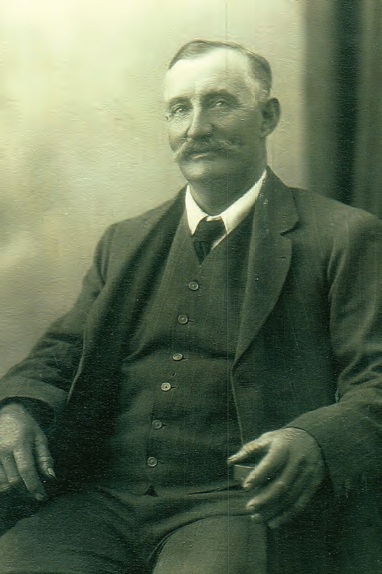
As a pioneer, he developed new techniques when it came to sheep and wool farming. He was also an authority figure with recognised expertise, teaching farmers how to tend and shear their flocks. In 1863, Wilhelm, together with a group of farmers and businessmen, launched a joint stock company in Queenstown to import pure-bred Merino stock from Germany. The imported rams and ewes were sold to Eastern Cape farmers, significantly improving local flocks.
With a courageous spirit, Baron Von Schumann played a major role in the development of agriculture in South Africa.
Wilhelm’s only son, William Arthur Schumann (Hilson’s grandfather), was raised by his grandparents, Uriah and Johannah Dicks, who did not want a German surname for their grandson. In 1873, they changed his surname to Shuman. As a result of this change, the prestigious title of Baron became obsolete.
In 1891, William established the Broman Merino Stud on his farm Brosdile in the Elliot district of the Eastern Cape. The Broman stud name originated from a combination of the first three letters of the farm’s name Brosdile and the last three letters of the surname Shuman. This stud became well known for its rams that enriched many flocks in the surrounding areas. The Broman ram was reported to be large and robust with a fine fleece of good weight.
The Elliot district has always had a very impressive Merino history. It is not surprising that this area can boast the third pure blood importation into the Eastern Cape. In 1895, William imported five Merino rams from the farm, The Elms, located in the Grays district in Essex, England. These rams were descended from the flock of King George III. His decision to import was described as a dynamic example, as the improvement of local flocks could only benefit the farmers.
William moved his farming operation from Elliot to Queenstown in 1918, after buying the farm Strydfontein in the Bolotwa district. He left his youngest son, William Kenneth Shuman (Hilson’s father), to begin his profession as a farmer on Brosdile. Strydfontein, with its sweetveld, was ideally suited to sheep farming. As a result, the Broman stud flock prospered and soon William became one of the most extensive sheep farmers in the Queenstown area. As Queenstown is a prominent wool-producing area, the question is sometimes asked: What is the largest crop of lambs ever bred or at least dropped in one season? Figures are not immediately accessible, but a competent authority indicates that 1923 was the year and William Shuman was the breeder. In that noteworthy year, Shuman recorded a crop of no less than 4 275 lambs. This was indeed a staggering total and whoever sought to better it would have to advance to astronomical figures. The Shuman farming business was known as Shuman & Sons; William had three sons, namely, Reaford Stanley, Ernest Fletcher, and William Kenneth.
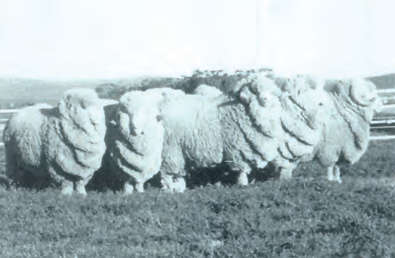
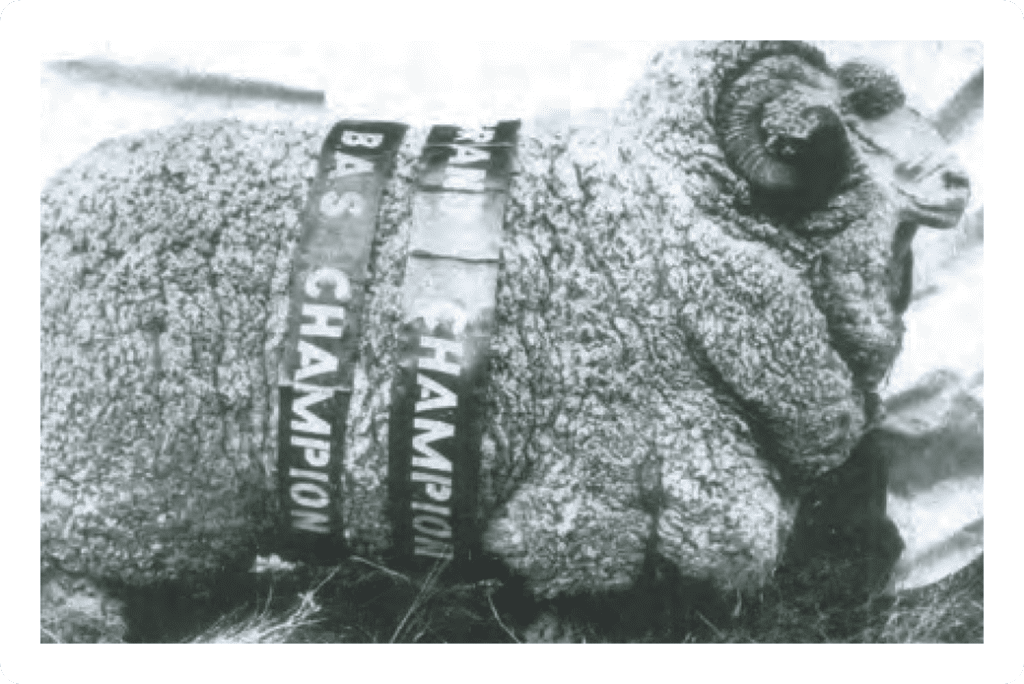
The five royal merino rams imported by William Shuman in 1895. He describes them as having a strong build and fine fleece. In 1891, Shuman was presented with a Sturgeon photographic advert. This led him to make enquiries about importation. Sturgeon & Sons quoted the following about their rams, “The progeny of a Sturgeon ram is found to do well in all hot countries, their thick fleece enables them to resist sun better than wet. One great feature of this flock is the strength and evenness of the wool”.
Historical Grey Craig
The farm was surveyed and named in 1859 by Alfred Murray, a Scottish land surveyor with the Cape government. It was surveyed as a piece of land containing 1 463 morgen and named ‘Grey Craig’.
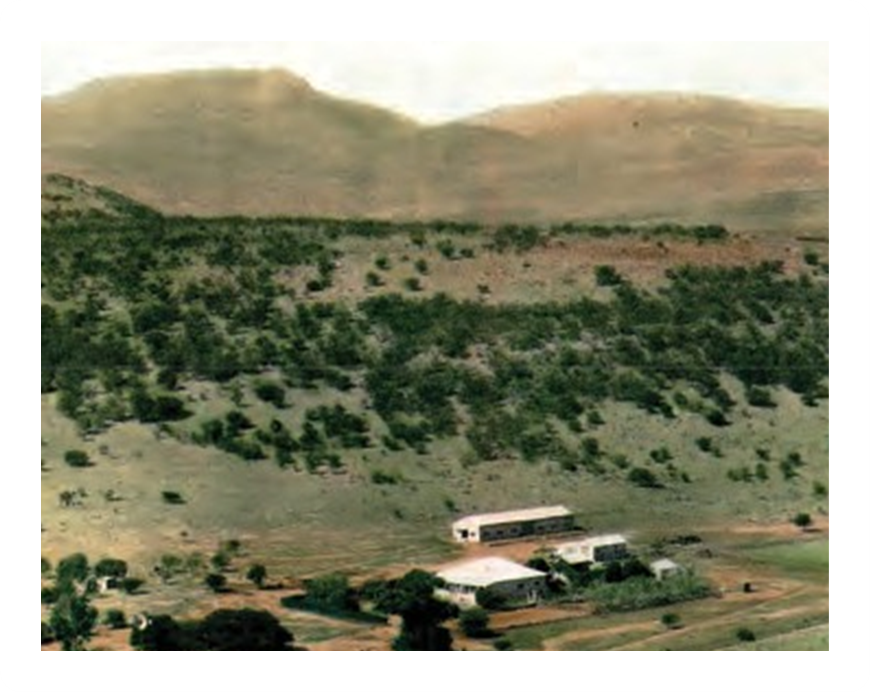
Grey Craig was granted to George Morris in the name of Her Majesty Queen Victoria and by His Excellency Lieutenant Robert Wynyard, administrator of the Government of the Colonies of the Cape of Good Hope. Grey Craig is a picturesque farm with its mountainous sweetveld and the Black Kei River, which winds its way around the farm like a serpent, rocky cliffs determining its curvaceous course as it forms the boundary between the Queenstown and Cathcart districts.
The Morris family, 1859–1868
George Morris paid a quitrent of £6 (six pounds) a year. He began his flock when he bought Saxon Merinos on an auction in Graaff-Reinet. The Saxon type was originally imported from Germany to South Africa in the 1840s. It was reported in 1863 that “Grey Craig was already well stocked with sheep, the hillsides covered with these small and hardy animals”.
The Fletcher family, 1868–1928
Joseph Fletcher purchased the farm from George Morris and paid £500 (five hundred pounds). The Fletchers were the owners of fine flocks which yielded desirable wools. They said sheep farming on Grey Craig was an uphill battle because of periodic droughts and the jackals, which played havoc with their sheep. After Joseph Fletcher’s death in 1891, the farm was subsequently worked by his sons John and Reuben, as well as Reuben’s son, Joseph (known as Joe).
The Shuman family, 1928 to date
William’s third son, William Kenneth Shuman (Hilson’s father and known as Ken), had a great love for sheep, running a large flock of exceptional merinos.
Joe Fletcher and Ken Shuman, cousins, swopped farms after an agreement was reached. Joe moved to Ken’s farm, Brosdile, in the Elliot district and Ken moved to Joe’s farm, Grey Craig, in the Queenstown district.
The Grey Craig Merino was defined as having advantageous qualities in its fine fleece and lusty stature. Being a progressive farmer, Ken set about developing Grey Craig and, over a span of a few years, built a bridge and weir across the Kei River, as well as a country house and shearing shed.
In 1925, he founded The Queenstown Pioneers, a farmers’ association in the Border area, which was instrumental in encouraging farmers in other areas of the Eastern Cape to form such associations, highlighting their importance for future generations of farmers in South Africa. Ken, together with his members, who were all exhibitors of Merinos, decided to hold a special exhibition each spring. The success of these shows was phenomenal from a technical point of view, attracting all the foremost breeders, and was ranked among the leading sheep shows of the Union of South Africa.
In the 1930s, Ken believed that Merinos had the potential to bring untold wealth to the average farmer. He would often tell friends that “a sheep’s hooves are lined with gold”. As chairperson of the Border Wool Growers’ Association in 1945, he started wool schools in collaboration with the Division of Soil Conservation and Extensions. In 1950, his prediction became a reality when a major ‘wool boom’ brought unthinkable wealth to farmers. During this period of prosperity, he received top price among the South African offers at the London sales – his lot being sold at 90 pre-decimal pennies per pound.
Sheep shearing on Grey Craig was always one of the main tasks on the farming calendar. On completion, Ken’s wool bales were loaded onto a wagon drawn by oxen and carted to the nearby station. The wagon with its heavy load, left wheel indentations on the tar road, which could be seen for many years after, reminding one of the ‘good old days’.
A passionate sheep farmer
Last year, in 2018, Hilson Shuman became the holder of the world-record 65th wool clip title, a feat that no other producer can lay claim to. He is as devoted to his Merinos today as he was in 1953, when he began his agricultural career on Grey Craig farm near Queenstown.
The Grey Craig Merino is an indigenous type that was evolved specifically for its environmental characteristics. Emphasis is placed on the best balance between true fine wool and top-quality mutton. This Merino type is an early-maturing, large-frame, and relatively plain-bodied sheep, producing a fleece that is soft-handling and of a good colour. It is extremely hardy and even manages to produce on relatively sparse grazing.
The prices paid for this breed’s first-rate wool on the open market are invariably among the highest in the country. Its degree of fineness ranges from 16 to 19 microns, and in tests involving sixty rams, an average of 17,1 microns with a scratch factor of 0,05% was recorded. Only rams with a zero-scratch factor are used.
After 65 years of constructive breeding, Hilson is convinced that his Merino sheep are indeed a specific type that can, without fail, transmit the desired criteria of a sturdy body, quality wool, and superb mutton. Today, the Grey Craig Merino is described as a sheep of outstanding calibre, bred under natural veld conditions in the Queenstown district.
With diligence and determination, Hilson (the stockman) and his wife, Isabel (the businesswoman), as well as their son, Kenneth (named after his grandfather) and daughter, Elizabeth, together with her husband, Stuart Reid, have all complemented one another in building a very successful farming concern, with many more clips surely to follow.